

.svg)

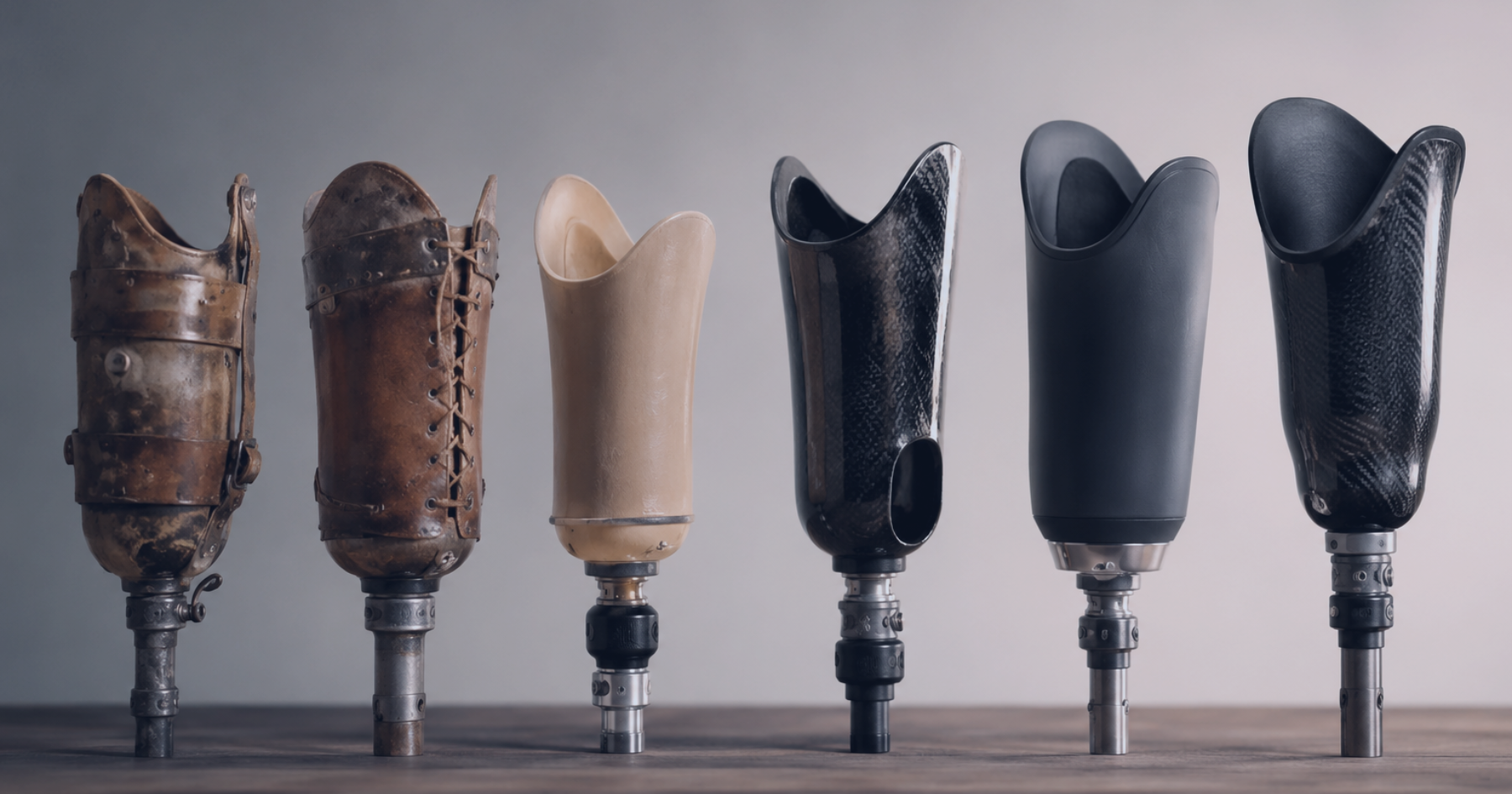
For a long time, most of the excitement in prosthetics was about componentry. Better knees. Lighter feet. Microprocessor systems that could adapt to terrain in real time. The innovation conversation was largely happening below the socket.
But something has shifted over the last decade. The industry's attention has been moving back up the chain, back to the socket itself. Not because componentry stopped mattering, but because clinicians and patients kept running into the same uncomfortable truth: even the most advanced prosthetic system is only as good as the interface holding it to the body.
The socket is that interface. As the industry has learned over the last decade, achieving a good fit is only part of the challenge. Maintaining that fit throughout daily use is equally important.
A Static Solution for a Dynamic Problem
The traditional approach to socket fitting made sense on paper. A clinician captured the shape of the residual limb, fabricated the socket around that shape, and made adjustments when problems came up. Fit was treated as something you achieved, then maintained reactively.
The challenge is that the residual limb is constantly changing. Residual limb volume naturally fluctuates throughout the day as a result of normal physiological processes and daily activity. Research has shown that these fluid volume changes can occur throughout routine prosthetic use and may be substantial enough to affect socket fit and comfort. For many patients, managing those changes meant adding or removing socks, making temporary adjustments, or returning to the clinic when discomfort became difficult to ignore.
For years this was just accepted as part of prosthetic life. What the industry eventually had to reckon with is that this was not a fabrication problem or a fitting problem in the traditional sense. It was a structural problem. A socket built around a single moment in time was always going to struggle with a body that keeps changing.
That realization is what has been driving socket development ever since.
The rise of adjustable socket systems
As the industry developed a better understanding of daily residual limb volume fluctuation, it became clear that maintaining a comfortable socket fit required more than a static design. Adjustable socket systems emerged as one of the first technologies designed specifically to address this challenge. Rather than asking patients to adapt to a changing fit, they introduced the idea that the socket itself could adapt as well. For many users, this meant fewer interruptions throughout the day, less reliance on sock management, and greater flexibility as limb volume changed between clinic visits.
As adjustable socket technologies have become more widely adopted, researchers and manufacturers have continued exploring new ways to improve comfort, suspension, and fit consistency. A recent systematic review found that most research and innovation in adjustable sockets has emerged within the last decade, reflecting the industry's growing focus on accommodating residual limb volume changes rather than simply reacting to them.
While adjustable socket systems represented an important step forward, most still rely on the wearer manually tightening or loosening the socket as their limb volume changes throughout the day. That has continued to drive innovation toward systems that can manage fit more dynamically and with less user intervention.
Elevated Vacuum Changed the Conversation About Volume
Elevated vacuum systems are another piece of this story. Earlier suspension strategies were primarily focused on keeping the prosthesis attached to the limb. Elevated vacuum expanded that frame by focusing on what was happening to the limb itself inside the socket.
Research has suggested that elevated vacuum may help support residual limb fluid volume stability while reducing pistoning during use. That matters because even small changes in fit can have downstream effects on pressure distribution, gait mechanics, and comfort over the course of a full day. For that reason, elevated vacuum became another important approach to improving fit consistency throughout the day, complementing other strategies such as adjustable socket systems.
Digital Tools Expanded What Was Possible
Socket innovation has not been limited to fit management alone. Over the past decade, digital technologies such as 3D scanning, CAD software, and additive manufacturing have also become more common in prosthetic practice. These tools have given clinicians new ways to capture limb shape, refine socket designs, and iterate more efficiently during the fitting process. While their role continues to evolve and adoption varies across clinics, they reflect the broader shift toward more personalized and flexible approaches to socket design.
Comfort Expectations Have Changed Too
There is a softer shift underneath all of this that is worth naming. Expectations around prosthetic comfort have changed. A decade ago, patients were more likely to accept discomfort and frequent fit management as unavoidable. The general assumption was that some level of daily frustration came with the territory.
That is less true now. Patients increasingly expect their socket to work consistently throughout the day, not just at the start of it. Clinicians have started setting that bar higher too. Research into pressure mapping, soft tissue behavior during movement, thermal management, and sensor integration reflects an industry that is taking long-term comfort seriously as a design goal, not just as a happy outcome.
The Shift That Actually Matters
Looking across all of it, the most important change in socket design over the last decade is probably not any single technology. It is a change in how the industry thinks about fit itself.
Fit used to be treated as a state you achieved. The goal was a good socket at delivery. Modern socket development is increasingly built around the idea that fit is something you maintain, and that the system needs to support that maintenance actively throughout daily use.
Adjustable socket systems, elevated vacuum, and newer adaptive technologies are all different expressions of the same underlying shift. Rather than treating fit as something that is achieved once, modern socket design increasingly views it as something that must be maintained throughout everyday life.
That framing changes what a good outcome looks like. It is not just how the socket fits when the patient walks out of the clinic. It is how consistently that fit holds up through everything that happens after.
.png)

%20(1).jpg)